Why does my bathroom smell like sewage? Floor traps, vents and toilet seals
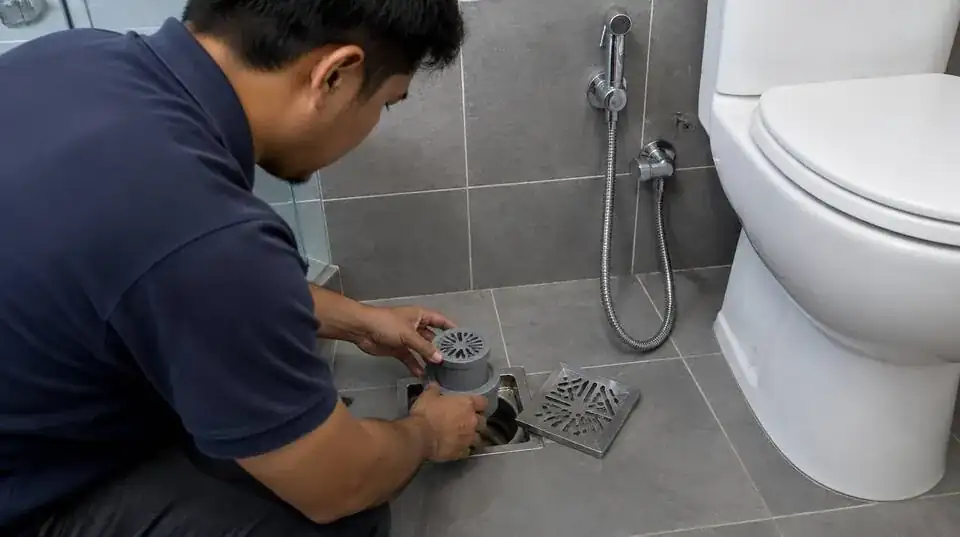 AI illustration
Most bathroom sewage smells come from a floor trap that has lost its water seal. Pour a bucket of water into the trap and clean out hair and soap scum. If the smell returns quickly, the cause is more likely a blocked vent, a cracked trap or a failed toilet seal, which a plumber should check.
1. A dry floor trap
Every floor trap holds a small pool of water, called the water seal, that stops gas from the sewer pipe rising into the room. In a guest bathroom or a unit left empty while you travel, this water evaporates and the smell comes straight through.
- Pour a bucket of water into each floor trap and run unused basins and showers for a minute.
- Do this regularly in bathrooms you rarely use, and cover the trap if you will be away for a long time.
2. Hair and soap scum in the trap
Hair, soap scum and other organic build-up rot inside the trap and smell on their own, even when the seal is full. Lift the grating, pull out what you can with gloves, then flush with plenty of water. Keep the grating in place to stop hair entering. If water drains slowly, see our guide to a blocked drain or toilet.
3. A blocked or missing vent
Drain pipes need a vent to balance air pressure. If the vent is blocked or was never installed properly, water flowing down the stack, for example when units above flush, can suck the seal out of your trap. Signs include gurgling sounds and a smell that comes back soon after you top up the trap. In a condo, the vent stack is usually shared, so report it to your management.
4. Anti-odour trap inserts
Self-closing inserts that sit inside the floor trap can help in bathrooms that are rarely used. Choose one that fits your trap size, and clean it often, because hair can jam the flap open. An insert does not fix a blocked vent or a cracked trap.
5. Toilet seal and when to call a plumber
A smell around the base of the toilet, a toilet that rocks or water at its base often means the seal between the toilet and the floor outlet has failed and needs replacing. Call a plumber if the smell persists after cleaning and topping up, if several drains gurgle, or if you see leaks. Costs vary with the cause, so ask for a written quote before work starts.
Questions people ask us
How often should I pour water into an unused floor trap?
There is no fixed rule because it depends on heat and airflow. Topping up every week or two in bathrooms you rarely use is a simple habit, and do it as soon as you notice a smell.
Will pouring bleach or drain cleaner fix the smell?
It may mask the smell briefly, but it does not fix a dry seal, a blocked vent or a failed toilet seal. Strong chemicals can also damage some pipes, so use them carefully and follow the label.
Why does my bathroom smell only after the upstairs units flush?
That pattern often points to a venting problem where flowing water pulls the water seal out of your trap. In a condo, report it to management because the vent stack is usually common property.
Guides
- Who pays for plumbing repairs in a rental: landlord or tenant?
- Why does my water heater keep tripping?
- Blocked toilet: what to try before calling a plumber
- Ceiling leak from the unit upstairs: who is responsible and who pays?
- Low water pressure at home: what causes it and how to fix it
- Bathroom leak waterproofing: injection or redo the membrane?
- Burst pipe at home: what to do in the first 10 minutes
- Outdoor (master) water filter in Malaysia: what it does, where it goes and how to maintain it
- Underground incoming pipe leak in a landed house: signs, responsibility and repair options
- Repiping a Malaysian home: PPR vs PVC vs HDPE, and when to replace old pipes
- How to choose an honest plumber in Malaysia
- Blocked kitchen sink or grease trap: causes, DIY steps and when to call a plumber
- How to check for a hidden water leak with your meter