Ceiling leak from the unit upstairs: who is responsible and who pays?
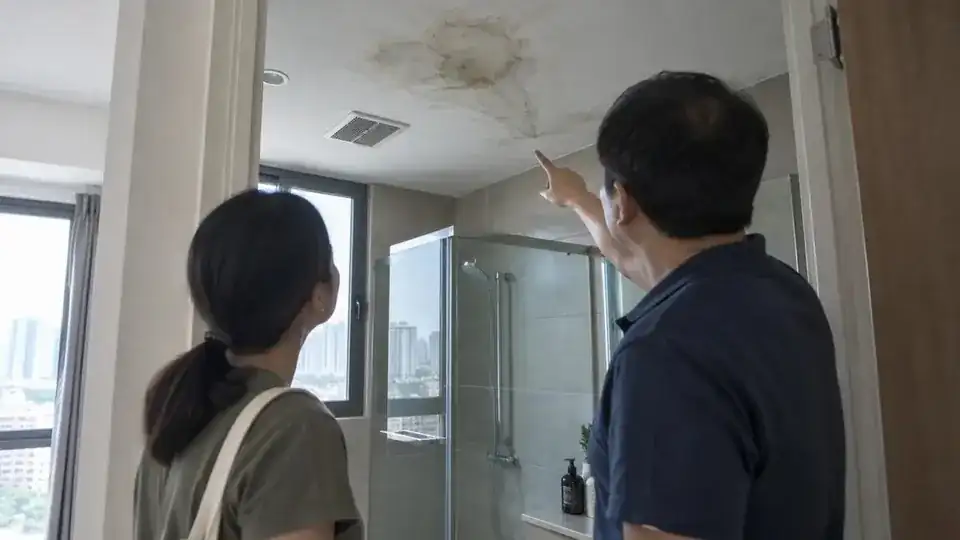 AI illustration
Under the Strata Management Act 2013, a ceiling leak is presumed to come from the unit above unless proven otherwise. Report it in writing to your JMB or MC, which must inspect and issue a Certificate of Inspection naming the cause and the party who must repair it. Shared pipes are common property.
If you rent
Tell your landlord in writing straight away, with photos and the date it started. Repairs to the building and leaks from another unit are normally the owner's or upper unit's cost, not yours. If your landlord or the JMB needs evidence, we can inspect and give you a short report with photos and moisture readings to forward to them.
Who is responsible
- The law presumes an inter-floor leak comes from the unit above, but this is only a starting point for the inspection.
- If the defect is in something that serves only one unit, such as that unit's bathroom waterproofing or its own pipes, that owner must repair it, even if the pipe runs through common property.
- If it serves more than one unit, such as a shared riser pipe or the roof, it is a common property defect for the JMB or MC.
- For a new building still within the defect liability period, report it to the developer first.
How the source is proven
- An inspection of both units and the shared pipes, with moisture readings at the wet patch.
- A ponding test: the floor trap of the bathroom above is blocked and the floor is flooded for at least 24 hours (often 48) to see if water appears below. The JMB or MC must inspect within 7 days of your written report and issue a Certificate of Inspection (Form 28). A dye in the water can help trace the path.
- Running the upstairs taps, shower and WC one at a time, or pressure testing a suspect pipe. See our concealed leak detection service.
Steps to take
- Protect your belongings and turn off electrical points near the wet area.
- Take dated photos and videos of the stain and any dripping.
- Give written notice (email counts) to your JMB, MC or developer. Keep a copy.
- Management must inspect, generally within seven days, and issue a Certificate of Inspection stating the cause and who must repair it. Refusing access for inspection is an offence.
- The responsible party must repair it. If they do not, management can do the work and charge the cost back to them.
Costs and escalation
Costs vary widely with the cause: re-sealing a fitting is very different from hacking and re-waterproofing a bathroom floor. Get a written quote and report. If you disagree with the Certificate of Inspection, you can refer it to the Commissioner of Buildings at your local council. If management fails to act, or a party ignores its duties, you can file a claim with the Strata Management Tribunal, which hears claims up to RM250,000. Check your building's by-laws too.
This guide is general information, not legal advice.
Questions people ask us
Can I go straight to the upstairs neighbour?
You can talk to them, but the formal process starts with written notice to the JMB, MC or developer, which must inspect and issue a Certificate of Inspection.
What if the upstairs owner refuses entry?
Owners must allow access for inspection. Refusing access for inspection is an offence under the strata regulations, so tell your management in writing.
Is a waterproofing injection enough?
Not always. Injecting from your ceiling may hide the symptom while the water source upstairs remains. Find and fix the source first.
Guides
- Who pays for plumbing repairs in a rental: landlord or tenant?
- Why does my water heater keep tripping?
- Blocked toilet: what to try before calling a plumber
- Low water pressure at home: what causes it and how to fix it
- Bathroom leak waterproofing: injection or redo the membrane?
- Burst pipe at home: what to do in the first 10 minutes
- Why does my bathroom smell like sewage? Floor traps, vents and toilet seals
- Outdoor (master) water filter in Malaysia: what it does, where it goes and how to maintain it
- Underground incoming pipe leak in a landed house: signs, responsibility and repair options
- Repiping a Malaysian home: PPR vs PVC vs HDPE, and when to replace old pipes
- How to choose an honest plumber in Malaysia
- Blocked kitchen sink or grease trap: causes, DIY steps and when to call a plumber
- How to check for a hidden water leak with your meter