Repiping a Malaysian home: PPR vs PVC vs HDPE, and when to replace old pipes
 AI illustration
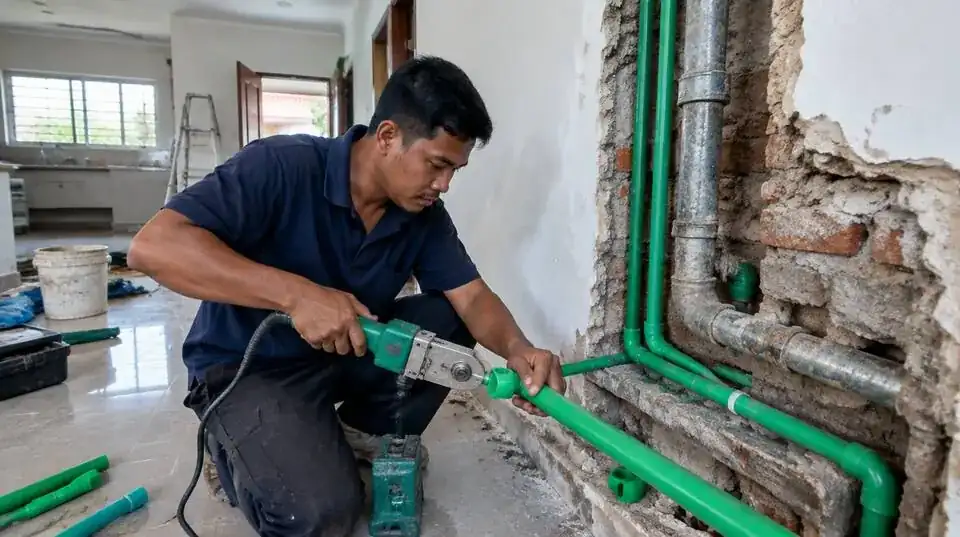
Many homes built more than 20 years ago use galvanised iron pipes that rust from the inside. Common replacements are PPR, which handles hot and cold water and is joined by heat fusion, PVC for cold water lines, and HDPE for buried supply pipes. Pipes can be concealed in walls or run on the surface.
Signs your home needs repiping
- Brown or rusty water, especially after the house has been empty for a while.
- Repeated leaks at different points, or rusty stains around joints and elbows.
- Weak flow at several taps that is not explained by the supply or the tank.
- Old galvanised iron (GI) pipes. Homes built more than two decades ago were often fitted with GI, which corrodes inside where water slows and sediment settles.
PPR vs PVC vs HDPE
- PPR (polypropylene random copolymer): suitable for hot and cold water, so it is common for bathroom and water heater lines. Pipe and fitting are joined by heat (socket) fusion into one solid joint, with threaded inserts used to connect taps and other materials. Check the manufacturer's temperature and pressure rating. See our water heater installation service.
- PVC / uPVC: light, corrosion resistant and low cost, but for cold water only. Joined with solvent cement. Often used for cold water supply and, in thicker classes, drainage.
- HDPE (polyethylene): flexible and tough, widely used for buried potable water supply, such as the line from the meter. Joined by fusion (butt or electrofusion) or mechanical fittings.
Concealed vs surface-run
- Concealed: pipes are chased into walls or floors for a clean finish, but this means hacking, plastering and retiling, and a future leak is harder to reach.
- Surface-run: pipes are clipped to walls or ceilings, often boxed in or painted. Less disruptive and easier to repair later, but visible.
What a repipe job involves
- Survey the existing layout, tank, heaters and fixtures, and agree which lines will be replaced.
- Shut off the supply and plan how long the house will be without water.
- Remove or bypass old pipes, install new lines and reconnect taps, heaters and the tank.
- Pressure test before walls are closed, then flush the system.
- Patch, plaster or retile where pipes were concealed.
One July 2026 consumer report quoted RM15,000 to RM20,000 for replacing the pipes of a double-storey home. Your cost will depend on house size, materials and how much is concealed, so get a written, itemised quote. If you are still having leaking pipe repairs, a partial repipe of the worst sections may be an option.
Questions people ask us
Can PVC be used for hot water?
No. Standard PVC is for cold water. Use a pipe rated for hot water, such as PPR, for heater and shower lines, and follow the manufacturer's temperature rating.
Do I have to repipe the whole house at once?
Not always. Some owners replace the worst sections first, such as rusty bathroom lines or the main incoming pipe. A plumber can advise after checking the condition of the existing pipes.
Is concealed piping better than surface-run?
Concealed piping looks neater but involves hacking walls and is harder to access later. Surface-run piping is less disruptive and easier to repair. The choice depends on your renovation plans and budget.
Guides
- Who pays for plumbing repairs in a rental: landlord or tenant?
- Why does my water heater keep tripping?
- Blocked toilet: what to try before calling a plumber
- Ceiling leak from the unit upstairs: who is responsible and who pays?
- Low water pressure at home: what causes it and how to fix it
- Bathroom leak waterproofing: injection or redo the membrane?
- Burst pipe at home: what to do in the first 10 minutes
- Why does my bathroom smell like sewage? Floor traps, vents and toilet seals
- Outdoor (master) water filter in Malaysia: what it does, where it goes and how to maintain it
- Underground incoming pipe leak in a landed house: signs, responsibility and repair options
- How to choose an honest plumber in Malaysia
- Blocked kitchen sink or grease trap: causes, DIY steps and when to call a plumber
- How to check for a hidden water leak with your meter