Blocked kitchen sink or grease trap: causes, DIY steps and when to call a plumber
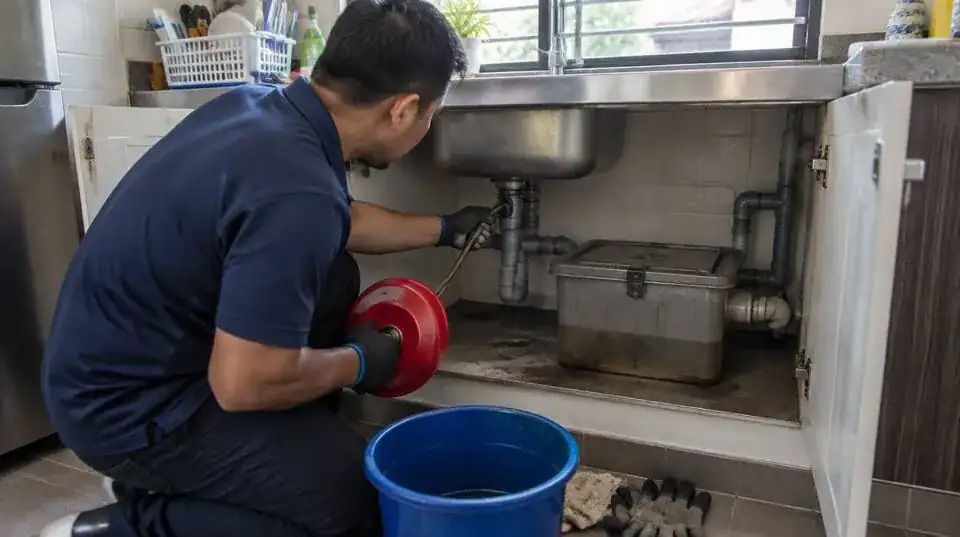 AI illustration
Most kitchen sink blockages are cooking oil and food scraps that harden in the trap and pipe. Scoop out standing water, try a sink plunger with the overflow covered, then clean the trap under the sink. If water still will not drain, or several drains are slow, a plumber may need a drain machine or jetting.
Why kitchen drains clog
- Cooking oil and fat cool and harden inside the pipe, narrowing it over time.
- Rice, noodles, coffee grounds and other food scraps get trapped in the greasy layer.
- Soap residue and a missing sink strainer make it build up faster.
Let oil cool, pour it into a jar or container and throw it in the bin, and wipe greasy pans with kitchen paper before washing.
Safe DIY steps
- Scoop out standing water and remove the strainer and any visible debris.
- Run hot tap water, not boiling water, which may damage PVC pipes and joints.
- Use a cup plunger. For a double sink, block the other drain and the overflow with a wet cloth.
- Put a bucket underneath, unscrew the bottle trap or P-trap, clean it and refit it hand-tight.
- Avoid mixing chemical drain cleaners or plunging after using them, as the chemicals can splash.
When to call a plumber
- Water still will not drain after the steps above.
- The blockage is past the trap, in the wall pipe or the floor trap.
- Several drains are slow, or water comes up elsewhere, which points to a blockage further down. See blocked drain and toilet.
A plumber may use a drain machine (spring cable) or water jetting to clear hardened grease. Costs vary with the location and access, so ask for a written quote first.
Grease trap basics: homes vs food premises
- Homes: most homes do not have a grease trap. Small under-sink units exist; if you have one, scoop out the grease layer and solids regularly, more often if you cook a lot of oily food.
- Restaurants and food premises: local council licensing guides in Selangor, such as for MBPJ and MBSJ, list grease traps at sinks and food preparation areas, and ask for photos of the grease trap when applying. MBPJ also says wastewater must pass through a grease trap before reaching public drains.
- DBKL introduced a compulsory grease trap cleaning scheme in 2017, which was suspended in 2018 pending review. Check current requirements with your local council.
- How often a commercial trap needs cleaning depends on its size and how much oil you use. Do not let the grease layer fill the trap.
Questions people ask us
Can I pour boiling water down a blocked kitchen sink?
It is safer to use hot tap water. Boiling water may soften or damage PVC pipes and joints, and it rarely clears a solid grease blockage on its own.
Do I need a grease trap at home?
Most homes in Malaysia do not have one. The best prevention is to keep oil and food scraps out of the sink. If you have an under-sink grease trap, clean out the grease and solids regularly.
How often should a restaurant grease trap be cleaned?
It depends on the trap size and how much oil the kitchen uses. Busy kitchens may need frequent cleaning. Check with your local council for any current requirements and keep a cleaning record.
Guides
- Who pays for plumbing repairs in a rental: landlord or tenant?
- Why does my water heater keep tripping?
- Blocked toilet: what to try before calling a plumber
- Ceiling leak from the unit upstairs: who is responsible and who pays?
- Low water pressure at home: what causes it and how to fix it
- Bathroom leak waterproofing: injection or redo the membrane?
- Burst pipe at home: what to do in the first 10 minutes
- Why does my bathroom smell like sewage? Floor traps, vents and toilet seals
- Outdoor (master) water filter in Malaysia: what it does, where it goes and how to maintain it
- Underground incoming pipe leak in a landed house: signs, responsibility and repair options
- Repiping a Malaysian home: PPR vs PVC vs HDPE, and when to replace old pipes
- How to choose an honest plumber in Malaysia
- How to check for a hidden water leak with your meter