Bathroom leak waterproofing: injection or redo the membrane?
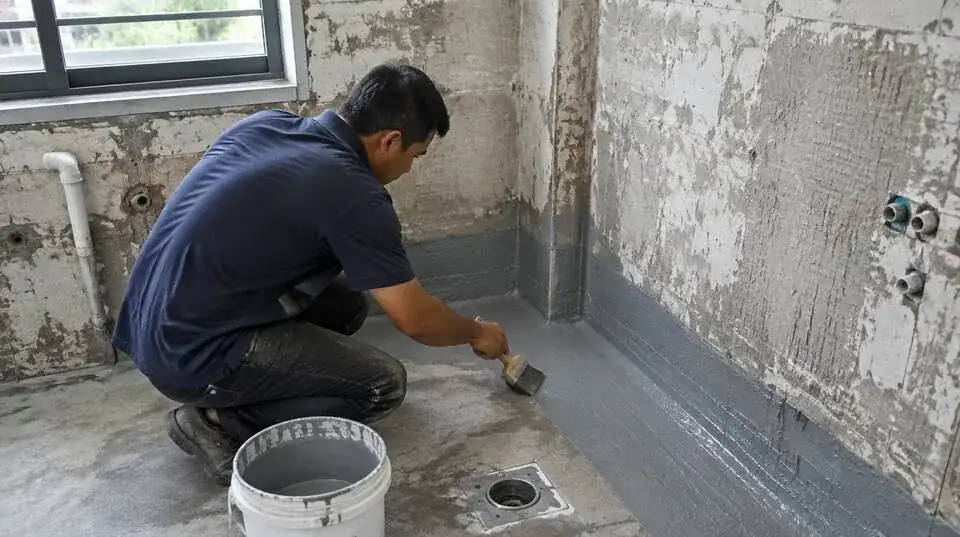 AI illustration
Find the source before choosing a fix. A bathroom leak can come from failed waterproofing under the tiles, a hidden pipe, the floor trap or a wall joint. Injection seals cracks from the surface and can work as a shorter-term fix, while redoing the membrane and screed replaces the actual water barrier and is usually more durable.
Diagnose the leak first
Water often shows up somewhere other than where it starts, such as a stained ceiling in the unit below or damp skirting next door. A proper inspection should show where it likely starts and whether the source is in your unit, the unit above or a shared pipe.
- Visual check of grout, the floor trap and wall-to-floor joints
- Moisture meter readings around the wet area
- A pressure test on suspect pipes, or a water meter test to rule out a supply leak
- A ponding (flood) test of the floor while the area below is watched
- Photos and a short written finding
If a hidden pipe is the cause, you need a pipe repair, not waterproofing. Our concealed leak detection service checks this first.
Injection vs redoing the membrane
- Injection: sealant is pumped through small holes drilled along grout lines. It is quick, needs no hacking and costs less, but it works from the surface and may not reach the real source.
- Re-screed with a new membrane: tiles and screed are hacked off, a new waterproofing membrane is laid, then the floor is re-screeded and re-tiled. It is messier and takes days, but it fixes the barrier itself.
One Malaysian property services blog reports injection quotes of around RM80 to RM150 per point and RM2,500 to RM8,000 per bathroom for a re-screed with a new membrane, depending on size. Costs vary, so always get a written quote after an inspection.
What a proper membrane job involves
- Remove tiles and screed down to the slab.
- Clean, repair cracks and seal around pipes and the floor trap.
- Apply the membrane with an upturn onto the walls, following the product's instructions.
- Let it cure, then do a ponding test of 24–48 hours before screeding. The membrane should turn up the walls 150–300mm at the floor and to about 1.8m in the shower. In a condo, apply to management for renovation approval first.
- Re-screed with a proper fall to the floor trap, then re-tile and seal.
Warranty questions to ask
- What exactly is covered, and is it written on the quote or invoice?
- How long is it, and what is excluded?
- If it leaks again, will they re-test and redo it at no cost?
- Will you get photos of the membrane before tiling?
See how our warranty works.
Red flags
- A per-point price over WhatsApp before anyone has inspected
- A promise of "no hacking needed" before diagnosis
- No moisture readings, photos or written scope
- A long warranty with no written terms
- Pressure to pay cash today for a discount
Questions people ask us
Is waterproofing injection a permanent fix?
Not always. Injection seals cracks from the surface and can stop some leaks, but if the membrane under the tiles has failed, water may find another path. Ask the contractor what the diagnosis showed and what the warranty covers if it leaks again.
How do I know if the leak is from a pipe or the waterproofing?
A plumber can pressure test the supply pipes or do a water meter test with all taps closed. If the pipes hold pressure, the leak is more likely from the waterproofing, floor trap or joints, which a ponding test can confirm.
Does the whole bathroom need hacking to redo waterproofing?
Usually the wet floor area at least, since the membrane sits under the screed and tiles. Some jobs also need the lower part of the walls redone. The extent depends on the diagnosis, so ask for a written scope before work starts.
Guides
- Who pays for plumbing repairs in a rental: landlord or tenant?
- Why does my water heater keep tripping?
- Blocked toilet: what to try before calling a plumber
- Ceiling leak from the unit upstairs: who is responsible and who pays?
- Low water pressure at home: what causes it and how to fix it
- Burst pipe at home: what to do in the first 10 minutes
- Why does my bathroom smell like sewage? Floor traps, vents and toilet seals
- Outdoor (master) water filter in Malaysia: what it does, where it goes and how to maintain it
- Underground incoming pipe leak in a landed house: signs, responsibility and repair options
- Repiping a Malaysian home: PPR vs PVC vs HDPE, and when to replace old pipes
- How to choose an honest plumber in Malaysia
- Blocked kitchen sink or grease trap: causes, DIY steps and when to call a plumber
- How to check for a hidden water leak with your meter